Photographs of an outwardly ordinary housing estate, which show how visionary ideas about green space and car free areas created a good place for growing up.
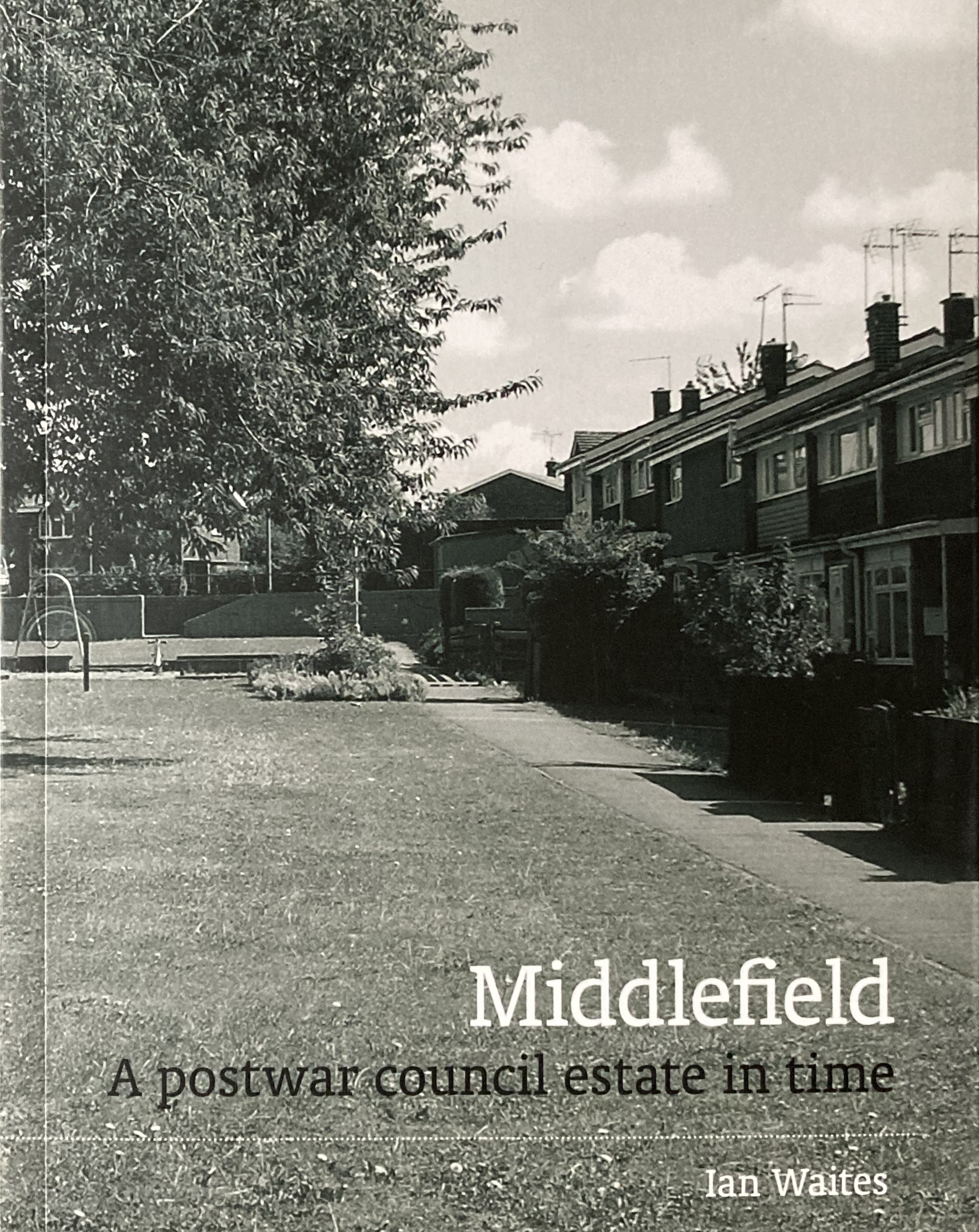
Ian Waites’s book Middlefield: A Post-war Council Estate in Time is a highly focused photographic essay about a modern housing estate. This is a council estate – built as public housing. It is modernist – the form and appearance following principles of light, outlook and ventilation. It is theory into practice – the radical idea of placing the fronts of houses to face shared open space with roads and parking at the rear.
Ian Waites returned to the estate in Gainsborough where he grew up to look again: to remember his personal associations, his family living in a new house, and growing up with his friends nearby. The photographs reveal his memories of childhood friends, prompted by the appearance of houses and children’s play areas. But Waites also returned to objectively critique: bringing an understanding of how and why the estate was built, its spatial arrangement, its robustness after decades of occupation and how things have changed. Now it has mature trees; garages and play spaces have been altered or removed, shops have gone.
Even with such changes, Waites shows an optimistically modern planning and architecture that works successfully for the people that live there – now presumably with many right-to-buy private owned houses. ‘The new estate pushed the town further into the countryside. The homes lined up against open fields….’ This estate extended the town outwards, a simple observation reflecting major planning decisions, typical in towns across the country. Waites says ‘critics of the time looked down upon this type of open development…… this was “Prairie Planning”.
But Waites’s book is sympathetic and positive. The appendix carefully lays out the facts about Middlefield’s visionary local authority origins, the architecture, planning and other cultural influences. In the introduction, Ian Waites speaks about the mature, established place years after Middlefield’s ‘new’ housing design was built by George Wimpey and Co Ltd: ‘The reality of the estate as it is today begins to assert itself, and on its own terms. New families live there now, while children continue to play in the same special places as I did. In a time of housing scarcity, this book reminds us that Middlefield is still here, is still essential, and still growing into something as we remember it.’ Of course, this is the case for hundreds of such housing estates of this era.

A photo that shows more than simply a car parked outside a house. We learn from the book that cars were kept ’round the back’ along short, cut de sac service lanes. This is the back of the house. The council originally built garages – in 2012 a number of these were removed, leaving clean white rectangles. The car is standing on the concrete that replaced garages. The photos suggest that the fencing replaced original horizontal board fencing.

The fronts of houses were reached by footpaths and led straight onto large, safe green spaces.
Waites observes, ‘Parks – Middlefied was… progressive: in 1965 it already had two play parks, one each side of the shopping precinct.’...
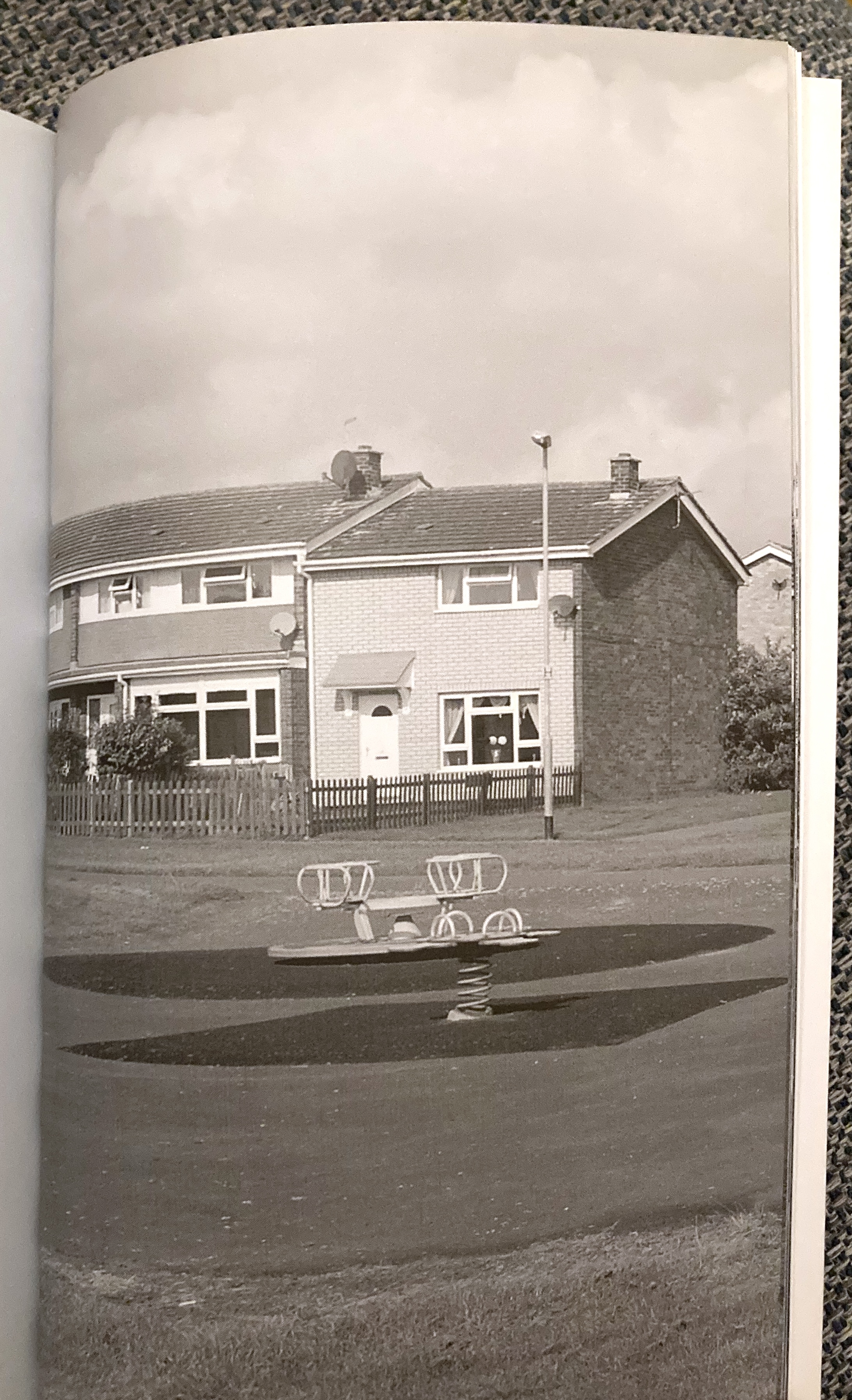
‘The baby park where the teenagers hang out…. ‘the big park’, where ten and eleven year-olds play….they have named all these parks, labelling them for themselves, creating reference points for their future memories.’
The photographs are categorised under headings focussed on typical characteristics of the estate, such as ‘Kerbs’, ‘Pebbledash’, ‘Maisonettes’, ‘Greens’, ‘Signs’, ‘Cut-throughs – the paths between houses that ‘threaded the estate together, and joined up the lives of the children who lived there’. Here is an example, a typological photograph of a streetlight:

‘The Phosco P107’ – ‘The P107 was the local authority lamppost of choice during the 1960s, and they are still being made today in Hertfordshire, that postwar stronghold of the council estate and new town’.
This small book contains a photo essay and observations about a specific council housing estate in Lincolnshire. Specific to the place and specific to the author’s life. The essay shows us how housing becomes home, and does so repeatedly over generations. Ian Waites does not say this, but the significance of the book is partly that it speaks for many housing estates and many personal memories of home. It manages to do this with carefully made photographs and a succinct commentary.
Ian Waites is a senior lecturer in the history of art and design at the University of Lincoln. His research explores the landscapes, histories, dreams and memories of post war England. The book is published by Uniform books 2017.
 Reading urban photographs